Our news feeds are replete with stories of suburban heroes who rise to the occasion and come to the rescue of their fellow citizens. It happens. We need to celebrate those moments.
Sadly, there are other occasions where those in difficulty are not helped. No rescue plan exists for them. This is the work so many involved in community development, health and social care spend their time. They are trying to highlight need and urgency. How do you get action from your fellow citizens? How can you create the momentum required to get change?
A hit and run on a wet night
In recent weeks one of our team was involved in a hit and run. Yes, it was raining and it was nighttime. Most likely the offending vehicle did not see the small Subaru BRZ driving at below the speed limit and to the conditions when they decided to change lanes. That knock caused the car to spin out of control across four lanes of traffic at 7pm before crashing into the guardrail on the side of the arterial road.
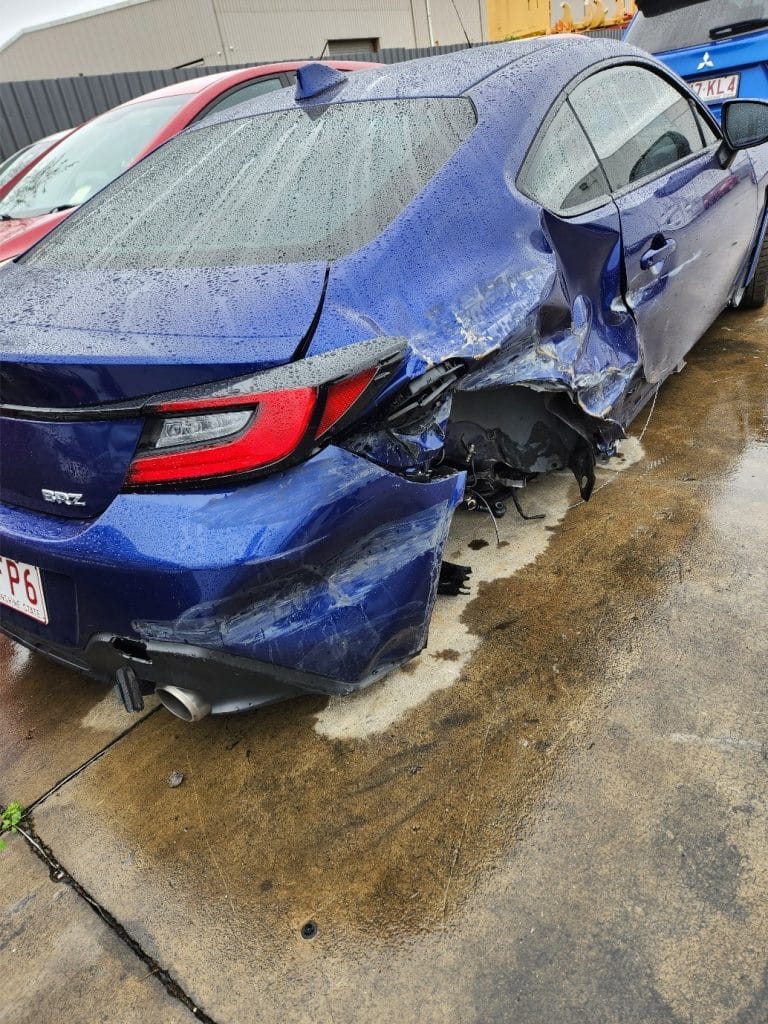
For the driver of the hit and run vehicle, maybe they were not insured so kept driving to avoid financial implications. Maybe they were driving drugged, over the limit or unlicensed and wanted to avoid another penalty and the loss of insurance cover. Whilst their actions cannot be condoned, they potentially had many conflicting thoughts in their highly aroused state. The police will deal with them through the criminal courts because society deems their actions as worthy of the exercise of public prosecution.
What of the other drivers in the three lanes which narrowly (and miraculously) avoided impact? Surely, a car careering across lanes, spinning out of control caught their attention? For subsequent drivers, a car facing the wrong way and wedged to the guardrails with debris on the road is not a usual sight. Despite that nobody came to assist. Fortunately, the impact and the car’s safety features left the driver uninjured. That was not the expectation of the emergency services when they arrived over 15 minutes later to survey the scene. The driver had to be helped from the vehicle and was deemed in need of a hospital check so this was not a low risk scenario.
How can we explain the lack of community response?
Psychological and Social Distance
Everyone was doing high speeds in the vicinity of 90 kilometres an hour. Slowing down to assist would mean manoeuvring to the shoulder which would likely be some hundreds of metres away from the site of impact. That geographic distance is enough according to the behavioural sciences to create psychological distance. Is this really a problem I am connected to?
The Bystander Effect and Diffused Responsibility
The motorway was full of traffic. Other drivers witnessed the accident. The bystander effect could have played a role. Who was responsible for stepping up? Hard to be held directly accountable when there were many witnesses.
The needs of the urgent and not the important could have been involved. Everyone was going to get wet and be inconvenienced. Much easier to get home for dinner and save yourself for those you know and love. Social distance in large cities means you prioritise those you know and feel no obligation to strangers. It is how we shut down the noise and challenges of living in large aggregations.
Urgency, Fatigue and Fear
Simple fear could be an explanation. That crash looked horrific. What could be in that little crushed car up against the guardrails? For those with blood phobias and no first aid or clinical training the whole thing could be very confronting. Would your unskilled efforts make a difference anyway? The potential costs versus the unpredictable returns are very real in such scenarios.
Anchoring can also be involved. You have a defined path; get home and get on with the tasks you have assigned for yourself that evening. Any alteration from the plan requires making new choices. A day full of choices can erode capacity to tune into the need for another switch in attention. Decision fatigue is real for many of us each day. It is easier to go with the flow.
Stereotyping and Snap Judgements
Finally, there is stereotyping. It was a sports car after all. We all know crazy young men drive those! Perhaps the driver of that sports car got what was coming to them? If they were stupid enough to speed or weave in traffic when it was raining solidly the law of natural consequence should apply. Is this not how villages have dealt with those who breach the rules for millennia?
So the psychologists and sociologists have given us a litany of reasons why nobody stopped that miserable night.
A bigger frame: social capital and cohesion
There is, though, a bigger frame than individual psychology. Each of these reactions is shaped by the stock of social capital around us – the networks, norms and reciprocal trust that make people willing to act for one another. Robert Putnam drew a distinction between the bonding social capital that ties us to people like ourselves and the bridging social capital that connects us across difference. A crowded motorway is rich in neither. The drivers shared a road but not a relationship, and without the thin thread of reciprocity that whispers ‘I will stop for you because one day someone might stop for me’, there was nothing to turn proximity into obligation.
This is close to what sociologists mean by community cohesion: the sense of belonging, shared values and mutual trust that holds a group together and turns strangers into fellow citizens. Where cohesion is high, helping a stranger feels like an extension of helping your own. Where it is low, the stranger stays a stranger. The cost of stopping is then borne by one person while the benefit is spread thinly across a community that may never repay it. Our motorway was a place of high density and low cohesion – a great many people, almost none of them connected.
Working through the aftermath
From Denial to Anger
How is one to respond after such an episode? First, be overjoyed at surviving untouched. The whole episode took just a few surreal seconds. For a least a few hours the disbelief can be overwhelming too. In terms of stages of grief, this is denial in its purest forms.
After the initial impact wears off, there is the burden of contacting insurers, dealing with police, sorting immediate transport and counting the out of pocket costs involved in replacing cars. This is busy work which can become mechanical whilst you are still a bit numb. It takes your mind off the bigger picture. The trees crowd out the forest for a while.
Then it hits you. You were left alone whilst vulnerable. The thoughts start circling about what might have been. The disbelief that nobody stopped turns to anger. Whilst you are dealing with the sleep disruption caused by re-living the accident and the extra work involved in finding a new vehicle the anger becomes outrage. The conviction builds that you are the only person you can truly rely upon. Everyone else is just out for themselves.
Why not join the race called self-interest? Why bother to consider the needs of others? These thoughts compete with ones which force you to consider what a society would be like if everyone gave up on the common good. This is the bargaining phase.
Bargaining with Cynicism: The Prisoner’s Dilemma
Game theorists have a name for the bind this creates. The prisoner’s dilemma describes any situation where the rational choice for each individual – to defect, to look after number one – leaves everybody worse off than if all had chosen to cooperate. On that wet arterial road, every driver who judged that stopping was costly, awkward and uncertain made a perfectly sensible decision on their own terms. Collectively, those sensible decisions produced a community in which a shaken driver sat alone in a wrecked car. The dilemma softens only when the game is repeated and people expect to meet again, because reputation and the prospect of future reciprocity make cooperation worthwhile. That is exactly what a cohesive community supplies and an anonymous motorway strips away. The real danger of the accident is not only the crash; it is the temptation to absorb the logic of the defector and carry it into every encounter that follows.
When adding up the costs of buying a replacement vehicle, sorting temporary transport and the unending hassle of progressing insurance, depression can be your constant friend. Misery likes friends so suddenly you find yourself more alert and perhaps even engaged in negative conversations. These can be energy sapping echo chambers which are hard to leave. It would be easy to change course as a result of such an event and embrace new and negative perspectives. Disillusionment would be your frame of reference. Powerlessness would be an easy attitude to embrace.
Acceptance or Withdrawal: The Choice We Face
You have choices. You accept the event has happened and move on with no remorse and even fewer regrets because you survived and stay the course as someone with a social conscience. Alternatively, you accept the new paradigm and spend the rest of your life more withdrawn, more easily irritated, suspicious and selfish.
We are all bystanders
When you think about it, this stream of events could just as easily be overlaid on other scenarios. Scenarios which affect members of your community every day. Situations which leave them feeling alone, vulnerable and misunderstood. Milestones which cause them to become bitter, self-protective and inclined to always be on the defensive. Isn’t it interesting how when we see such anger in a person or marginalised group we are shocked? We label them as rebels and stop listening.
This makes it so much easier to let challenges pass. The reality is that in our communities we are all bystanders every day. We do little to add to the civic conversations which are supposed to flavour decisions in democratic societies. We are grateful we have a house we can pay off and the security of a professional role and give lip service to the needs of others who are less fortunate. Surely that is government’s role? The same government drawing on the views of targeted and comfortable minorities rather than the express wishes of the populace.
When policy does not play out well we blame the victims. Surely they could get a better job if they just worked harder and that would allow them to get out of poverty? If they just stopped spending money on drink and smokes they would have all they need to feed their families! If they ditched their dodgy partner they would have fewer healthcare issues and their kids would thrive at school. It is easy to be a bystander when there is someone else to blame.
Our stereotypes of what sits behind social issues are pervasive and influence how programs and policy are shaped. We talk about “non-compliant” patients rather than trying make healthcare respond to the needs of those with complex health and social care challenges. We count those who attend services and celebrate. We ignore the groups who never access programs aimed at addressing their problems…because we fail to understand problems from their perspective. They don’t count.
We become depressed about the state of affairs and decide it is someone else’s agenda because the scale of change seems too big. Worse, we just accept the status quo and have no fight left to mount opposition.
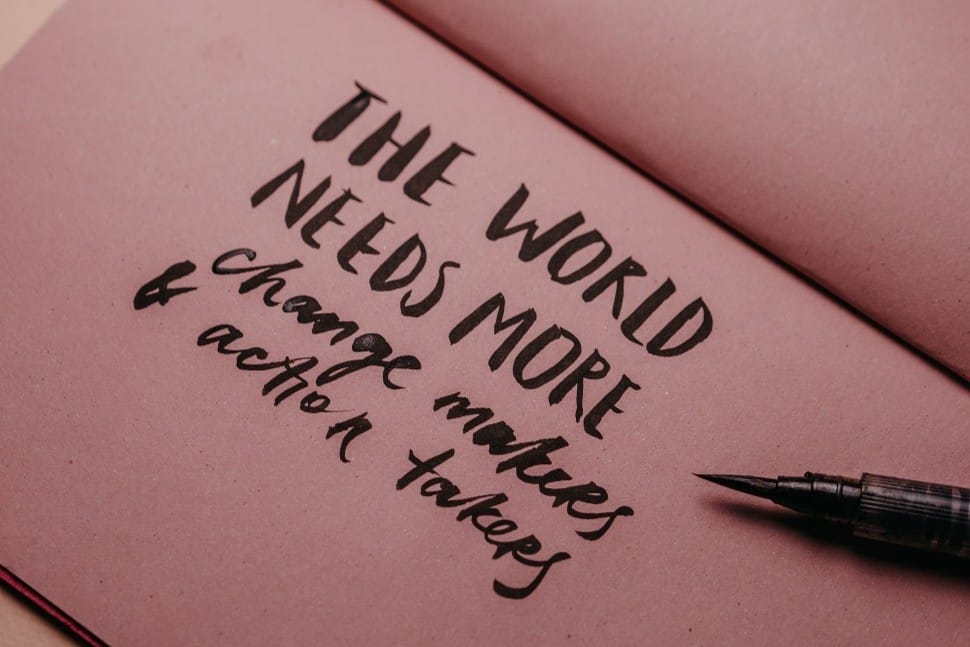
From bystander to change maker
This narrative applied to us means there is no point being angry about those who failed to stop at the scene of an accident. It is better to use the energy to create insight. Look around you and identify a person, an issue, an organisation, a policy agenda where things are coming to grief.
Once you have decided what interests or engages you, go and learn. Digging into the agendas, listening to multiple voices, pressing in where it would be easy to assume…these are the habits of the change makers. It is from such processes that advocacy emerges. It is here that solutions are found in common with those at the point of impact. Real reform can only start when you get past denial of the need, anger at those affected, depression about the state of affairs and acceptance of the same old solutions. Your efforts can be transformative as you have already done the hard yards; you have changed your mind. With that done, you can change others too! This is where movements for change are born, when the foundations of co-design take hold.