Authenticity, resilience and self-awareness in real co-design
Co-design upends the status quo
Co-design is a process that fundamentally upends the status quo. True co-design is about all the voices in a room having equal status. It is about listening deeply to those whose voices may have been ignored for many years.
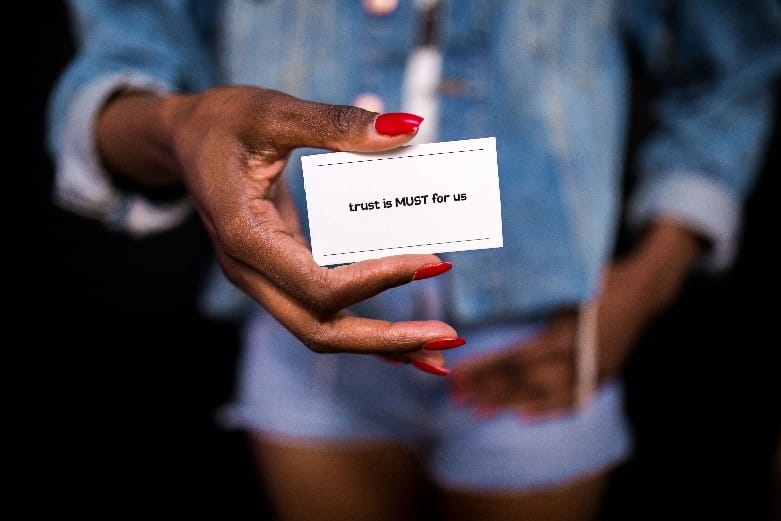
As Kelly Ann McKercher argues in Beyond Sticky Notes, the work is ultimately about sharing power and elevating the contributions of people with lived experience — and, as she puts it, there is no co-designing without co-deciding (McKercher, 2020).
The impact of that deep listening on those most marginalised can be especially painful to hear. Worse, for those telling their stories and trying to engage as equals with the players who represent the systems that may have harmed them, the whole process can be triggering. That, in turn, can lead to unhelpful and even unpredictable behaviours — not because people are difficult, but because genuine power-sharing surfaces histories that controlled consultation usually keeps safely off the table.
When the room turns: the shadow side of sharing power
Behind-the-scenes sniping can be common, even when everyone appeared to leave the room on a high. Rumour-mongering that this is just another consultation that will go nowhere can be an early distraction. Saying one thing in the room and another outside it is common. The bounds of mistrust are endless. They can also be particularly hard to manage for those intent on putting things right, because the sabotage can feel like a personal attack.
The constant damage control is another challenge in keeping faith with those sponsoring the exercise. If the behaviour becomes public, it can tip the pendulum back towards more controlled consultation rather than true co-design. At least in a consultation model, the timelines, the determination about what to take forward, and the announcements of outcomes all remain in the hands of the organisation managing the process.
The tipping point: consultation or co-design?
This is the fault line that Sherry Arnstein mapped more than half a century ago. In her ladder of citizen participation, she distinguished the lower rungs — informing and consultation, which she classed as forms of tokenism that offer the appearance of involvement — from the higher rungs of partnership and citizen power, where decision-making is genuinely shared (Arnstein, 1969). Retreating from co-design to consultation is, in effect, stepping back down the ladder. Sometimes that is the right and safe call; but it is worth naming the move for what it is.
Whether a project holds its position often comes down to how battered and yet resilient the facilitation team is. If they are still fighting to retain a co-design model, able to point to the positive outcomes achieved to date and to energise a room with what comes next, the sponsors may stay the course. To present in such an assured way, facilitators and project owners need a few rules of thumb for making sense of the behaviours that threaten to embroil a project.
Rule one: assume a competence deficit, not malice
The first rule of engagement is to assume that when things do not go as planned, a lack of competence — not malicious intent — is the explanation. Social psychologists have a name for our instinct to do the opposite: the fundamental attribution error, our tendency to explain other people’s behaviour in terms of their character and intentions while discounting the situation they were actually in (Ross, 1977). In a charged co-design process, that bias is amplified.
Competence deficits can occur in many ways. Perhaps the rules of engagement were not clear and people felt they could talk out of school. Perhaps the facilitator did not explain the process and next steps clearly enough to engage hearts and minds. Perhaps the person who leaked was simply not skilled with their communication, and others took advantage of that. There are so many points at which things can break down. Taking time to reflect on how competence — rather than character — could be undermining good process is always a useful exercise. It leads to tighter planning of subsequent events, engagement strategies and stakeholder management.
Rule two: it is (really) not about you
The second thing to do, after reflection, is to realise that even when bad things feel like they have happened to a good person, you may not have been in the firing line at all. It is easy to assume a personal assault. More often than not, other parties are not really thinking about you.
This is the spotlight effect at work. In a now-classic set of studies, Gilovich, Medvec and Savitsky demonstrated that people consistently overestimate how much others notice and remember their actions — and, tellingly, how prominent their own contributions seemed in a group discussion (Gilovich, Medvec & Savitsky, 2000). When we lead a project or are the face of a meeting, we assume everyone keeps thinking about the outcomes with us in mind. Usually, continued reference to us is far more limited than we would like to believe. Our stakeholders are focused on the issue and their own perspectives, not on us and what we have done.
Recognising your own lack of significance in the vocalisation that may be happening is a big pill to swallow. But it is also why we should generally discount maliciousness as the desired objective. We are not that big a feature in the landscape; the issues that matter to individuals are. That can be a very humbling realisation — and it might be the most helpful insight you ever have about leading change.
Unwrapping the gift: staying curious under fire
So, despite the angst you may feel, the faster you can recover and unwrap the gift in the moment, the faster your project will get back on track. Remaining curious is the answer. What is underneath the gossip and the back-biting? Perhaps the process has triggered emotion about history for the individuals or organisations involved. Try to find out what their motivations and drivers really are, rather than assuming. Accurate detail makes for far better planning than rash assumptions.
The conversations you least want to have
This often means reaching out to the very people you feel least like talking to. We are changed one conversation at a time — a truth Susan Scott built her work on — and when you are working with groups that have divergent interests, histories, power and perspectives, it is never more true (Scott, 2002). Those conversations are where the real intelligence lies. Simply being transparent and genuinely curious can open a window into another person’s thinking. They might not like you, but they are more likely to honour your good intent with a few gems that help you assemble the rest of the puzzle.
How you hold those conversations is everything. It is easy to become defensive and to justify, which stops conversation in its tracks. As the authors of Difficult Conversations observe, shifting from delivering your version of events to genuinely inquiring into theirs is what keeps a hard conversation alive (Stone, Patton & Heen, 1999). So ask questions in ways that do not feel like an interrogation of someone’s motives. The easiest prompt to remember when you are emotionally charged is simply “why?” Why is that important? Why did that happen at this time? Why is there an association between this and other events? Why are people motivated as they are? Return to your three-year-old self and delight in digging deeper with “why”.
Asking better questions: the Five W’s
For a fuller conversation, use the Five W’s framework, one of the tools in the Co.Design4All toolkit. Asking who, what, when, where and why lets you quickly extract context and, hopefully, the complete story. The five work together by surfacing complete information around:
- Who: who is involved, who is affected, who is responsible? Who knows and who cares? Who might do what next?
- What: what really happened, what is the issue or issues, and what is really driving the situation?
- When: when did it happen, or when is it likely to take place? When in the series of events will this become critical?
- Where: where did it happen, or where is the location most affected? Where in the document or negotiation is this likely to become inflamed?
- Why: why did it happen, or what is the underlying cause? Why is this so important?
Taking a curious, even investigative approach can defuse your own emotion. It lets you play fact-finder rather than defender. Using your head in this way can ultimately give you the information you need to heal the wounds to your heart. It is surprising how often a little more information makes us step back and wonder why things were not clearer before.

The inner work: understanding your own triggers
The final part of the process is to understand why a particular conversation, action or behaviour caused you such pain. Understanding your own triggers is part and parcel of growing into the person you need to be in the situation. There are tools to help. Untanglethis.com offers a free, confidential and psychologically validated way to make sense of what is happening, and through that to feel better and know what to do.
Five Prompts for Making Sense of What Happened
- What happened — just the facts, not your interpretation. It is surprisingly hard to list what happened without adding meaning. Our tendency to climb the ladder of inference — leaping from observable data to conclusions and judgements — is deeply hard-wired (Senge, 1990). That is why another Co.Design4All reflection tool asks you to slow down, list the rapid-fire thoughts you just had, and name the rungs of your own ladder. In the process you often see assumptions that may not stand the test of time.
- What you felt — your chance to describe how the situation landed for you. When you are caught up in emotion it can be hard to separate out why you are feeling so much. Ticking off the many emotions, confusing and intertwined as they are, can be confronting; it reveals the patterns or fears that have driven your response.
- What mattered — your chance to name your real needs. As Marshall Rosenberg’s work on nonviolent communication reminds us, a strong reaction is almost always a signal that an underlying need is not being met (Rosenberg, 2015). In a busy life we often forget to ask what our needs are. Once they are in the open, you may realise that this situation and these people are not where that need is going to be met — and backing off to find another way of meeting it can be just as important as pressing on.
- What may be going on for them — in our ego-protective world it is easy to overlook what might be driving someone else’s behaviour. This prompt asks you to take the other person’s perspective. What matters to them, or what is the matter with them right now, and how does that explain what they did? Compassion and understanding often follow.
- What to do next — finding a way forward is why we keep growing. Understanding ourselves and others is hard work, but it is only part of the journey. What we do with those lessons is what counts. So what are your next steps?
The most under-estimated voice in the room
One of the biggest insights this reflection can surface is what your goals really are. Knowing what matters most to you shapes how you interpret and engage with the wider world. We assume we know ourselves, yet we hold so many goals and so many things of importance that some of them get lost. When strong emotion rises in a conversation, the chances are we are brushing against something that matters to us. Naming it is the first step. The second is asking whether that goal is being met somewhere in our lives, because unmet goals create the triggers that make it harder to stay present as we converse or facilitate.
Aristotle is often credited with the maxim that knowing yourself is the beginning of all wisdom. The clarity that comes from understanding yourself is what lets you understand others and be ready for them in new ways — a point modern research on self-awareness echoes, linking it to better judgement, stronger relationships and more effective leadership (Eurich, 2017). When we grasp how flawed we can be, it gives us the generosity and humility to extend others the benefit of the doubt. When we understand our own motivations, it becomes easier to see them in others.
So perhaps the most under-estimated voice in the room in co-design is our own inner voice. Unless we listen to it, we will struggle to truly hear and honour the other voices making themselves felt. Drowning out our quiet reflections when we are busy is, in the end, self-defeating — even when so many other noises are clamouring for our attention.
Article References
- Arnstein, S. R. (1969). A ladder of citizen participation. Journal of the American Institute of Planners, 35(4), 216–224.
- Eurich, T. (2017). Insight: The surprising truth about how others see us, how we see ourselves, and why the answers matter more than we think. Crown Business.
- Gilovich, T., Medvec, V. H., & Savitsky, K. (2000). The spotlight effect in social judgment: An egocentric bias in estimates of the salience of one’s own actions and appearance. Journal of Personality and Social Psychology, 78(2), 211–222.
- McKercher, K. A. (2020). Beyond sticky notes — doing co-design for real: Mindsets, methods and movements. Beyond Sticky Notes.
- Rosenberg, M. B. (2015). Nonviolent communication: A language of life (3rd ed.). PuddleDancer Press.
- Ross, L. (1977). The intuitive psychologist and his shortcomings: Distortions in the attribution process. Advances in Experimental Social Psychology, 10, 173–220.
- Scott, S. (2002). Fierce conversations: Achieving success at work and in life, one conversation at a time. Viking.
- Senge, P. M. (1990). The fifth discipline: The art and practice of the learning organization. Doubleday. (On the ladder of inference, after Chris Argyris.)
- Stone, D., Patton, B., & Heen, S. (1999). Difficult conversations: How to discuss what matters most. Viking.